


In a world where AI is redefining how we work, the most valuable asset a business can have is a team ready to innovate with it.
Artificial Intelligence (AI) is no longer a futuristic concept, and as automation and AI-driven decision-making become the norm, businesses must equip their teams with the skills to adapt and thrive. The question isn’t whether AI will impact your organization—it’s whether your workforce is ready to embrace it.
In this guide, we’ll explore why AI training is crucial for every team and how reskilling employees can unlock new levels of productivity, creativity, and growth.
Table of Contents
Why AI Training Matters in 2025
AI is revolutionizing how businesses operate, offering tools to automate tasks, streamline operations, and uncover new opportunities. Without proper training, employees risk being left behind in an increasingly AI-driven workplace. Here’s why AI training is more important than ever:
1. Stay Competitive in an AI-Driven World
Industries across the board are integrating AI into their workflows. Training your workforce in AI ensures your organization stays ahead of the curve, identifying opportunities that competitors might miss.
Studies show that 93% of organizations that implemented AI across multiple business functions reported significant time savings, while 83% saw cost reductions (Business.com, 2024).
Companies like Ikea and JPMorgan Chase are rolling out large-scale AI literacy programs to ensure their workforce remains competitive in the evolving job market (Raconteur, 2024).
2. Boost Efficiency and Productivity
Employees trained in AI can automate repetitive tasks, freeing up time for higher-value strategic work. From marketing analytics to customer service automation, AI can revolutionize processes across departments.
Research indicates that employees using AI tools report up to a 40% increase in productivity in areas like workflow automation and data analysis (Forbes, 2024).
Personalized AI learning systems have been shown to boost employee productivity by 57%, enabling businesses to achieve more with fewer resources (Virtasant, 2024).
3. Empower Data-Driven Decision-Making
AI tools enable teams to analyze complex datasets, uncover trends, and make faster, more informed decisions—crucial for innovation and growth.
60% of employees leveraging AI report stronger decision-making capabilities thanks to access to rapid insights and predictive analytics (SandTech, 2024).
Advanced data analytics platforms powered by AI help companies like Amazon and Netflix analyze user behavior, driving personalized recommendations and business growth (CourseBox.ai, 2024).
4. Address Talent Gaps Without Relying on Hiring
Instead of searching for external hires with AI expertise, businesses can upskill their existing workforce, saving time and resources while retaining institutional knowledge.
Training existing employees in AI can save businesses the equivalent of hiring 2 full-time workers for every role automated by the technology (Virtasant, 2024).
Walmart’s internal AI upskilling program helped them reskill over 100,000 employees, enabling the company to fill talent gaps without relying on external hires (Raconteur, 2024).
5. Foster a Culture of Innovation
Reskilling employees in AI creates a forward-thinking culture where teams feel empowered to experiment with emerging technologies and drive continuous improvement.
80% of employees who use AI daily report increased job satisfaction, with many feeling more passionate about their work due to reduced repetitive tasks (CourseBox.ai, 2024).
Bank of America uses AI-powered simulations to train employees for real-life client interactions, fostering confidence and innovation in customer service delivery (Virtasant, 2024).
How AI Training Benefits Employees and Organizations
For Employees:
- Future-Proof Careers: With over 58% of employees expecting significant changes in their job skills due to AI by 2030, training ensures they remain relevant in the evolving workplace (Raconteur, 2024).
- Increased Job Satisfaction: 73% of workers report higher satisfaction when using AI tools that eliminate mundane tasks (Forbes, 2024).
- Career Growth: Certifications in AI open doors to advanced roles that are increasingly in demand across industries.
For Organizations:
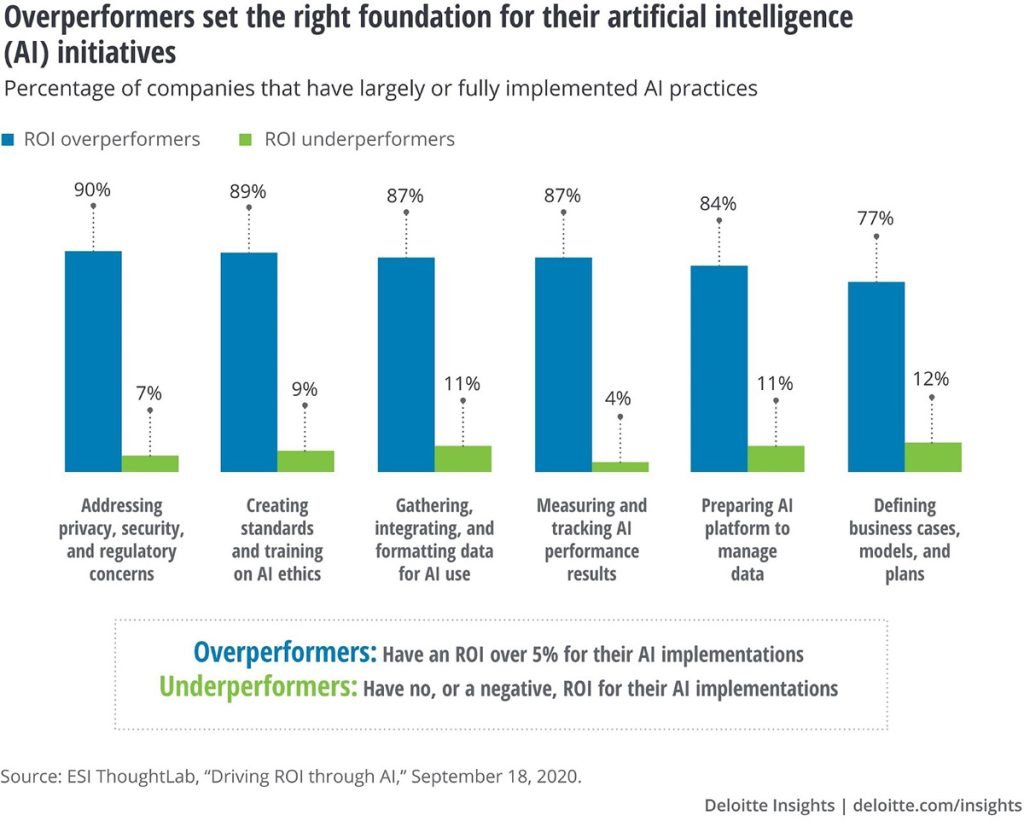
- Cross-Functional Benefits: Companies leveraging AI across departments have seen productivity gains of up to 40%, translating into higher ROI on technology investments (Virtasant, 2024).
Example: Companies like Siemens and Philips are using AI to improve everything from manufacturing processes to healthcare solutions, resulting in measurable cross-departmental productivity gains (CourseBox.ai, 2024). - Maximized ROI on AI Investments: Businesses that offer comprehensive training programs report a higher utilization rate of their AI tools, ensuring maximum return on investment.
- Organizational Agility: Companies embracing lifelong learning see improved adaptability among employees, enabling them to keep pace with technological advancements.
How to Get Started with AI Training
Investing in AI training is a strategic move, but where should businesses start? Here’s a roadmap to ensure success:
1. Assess Skill Gaps and Business Goals
Identify which departments or roles need AI training.
- Example: Technical teams may benefit from machine learning courses, while business leaders can focus on AI’s strategic potential. Customer-facing teams might explore AI tools for better service delivery.
Ikea trained over 40,000 employees on generative AI tools as part of its digital transformation strategy (Raconteur, 2024).
2. Choose Tailored Training Programs
Select training programs that align with your team’s needs. Look for:
- Beginner-friendly courses on AI fundamentals.
- Advanced certifications for technical roles.
- Practical, hands-on projects to solidify learning.
Personalized learning paths powered by AI can address individual skill gaps more effectively than traditional methods (Virtasant, 2024).
3. Opt for Flexible Formats
AI training should work around your team’s schedule. Consider:
- Virtual instructor-led classes.
- Self-paced, on-demand courses.
- In-person corporate training sessions.
Online courses and certifications remain popular due to their accessibility and ability to integrate seamlessly into employee schedules (Business.com, 2024).
4. Prioritize Certifications
Earning certifications from trusted providers like AWS, IBM, and Microsoft validates your team’s expertise and gives your organization a competitive edge.
5. Make AI Learning an Ongoing Process
AI is constantly evolving. Encourage your team to embrace lifelong learning and stay updated on the latest tools and techniques.
The World Economic Forum estimates that corporate upskilling initiatives could create a net increase of 5.3 million jobs globally by 2030 (Virtasant, 2024).
AI Training Programs Tailored for Your Business
At LearnQuest, we specialize in delivering AI training solutions that meet the unique needs of businesses. Our offerings include:
- Customizable Corporate Programs: Tailored to align with your business goals and team roles.
- Hands-On Learning: Practical projects to ensure employees can immediately apply their skills.
- Expert Instruction: Learn from industry leaders with real-world AI experience.
Future-Proof Your Workforce Today
AI isn’t just transforming industries—it’s transforming how we work, think, and innovate. By investing in AI training, you’ll not only empower your employees but also position your organization as a leader in the AI-driven economy. From boosting efficiency to fostering a culture of innovation, the benefits of AI training are clear.
Key Takeaway: Companies that prioritize employee training see measurable benefits—higher productivity (up by as much as 40%), better decision-making (60% stronger), cost savings (up to $120K annually), and enhanced employee satisfaction (73%) (Business.com, 2024; Forbes, 2024; CourseBox.ai, 2024).
Ready to take the next step? Let’s build a smarter, more adaptable workforce together.
Contact Us to Explore AI Training Options